Jul 28 2010

Kicking Back With Colombard

img_0001_51

Summer continues to perplex much of the nation.   The majority of the country continues to belabor under the stronghold of a crippling heat wave; yet California’s Bay Area and Napa Valley pass each day with cooler than average temperatures.   No matter the weather that you may be experiencing, Colombard can be delightful in any summer setting.

Colombard, or “French Colombard” as it is referred to in California, is a white wine that may sound exotic but is far more familiar to the palate than one may originally think.  In the 1970’s, when California discovered that French Colombard would grow well in its climate due to the grape’s ability to thrive in heat increased its plantings and continued to do so well throughout the 1980’s.    While the grape can be made into its own singular varietal, today it is commonly found in California as a blending grape in other white wine.   The grape itself produces a wine that is moderately dry, has well-balanced acidity and is often described as spicy with floral qualities.   Its qualities are not as showy as other white wines, yet nevertheless, if it is made well it can be the perfect dining companion during hot trying summer months.

In addition, if the grapes hail from old vines in addition to the wine later being made well, then the connoisseur’s palate is in for a poetic treat.  Casa Nuestra Winery (“Casa Nuestra”) in Napa Valley is fortunate to have old vines of French Colombard on its vineyard estate and to add a unique twist to this misperceived obscure grape, the winery produces it in the form of a late harvest dessert wine.   “Late Harvest” is a wine term which means (as it implies) that the grapes are picked towards the end of the harvest, when they are very ripe and have a high sugar content (with a minimum of 24˚ Brix).   This sugar content can be even higher if the grapes have been infected with a desirable fungus known as Botrytis Cinerea, which causes the grape to shrivel but in doing so concentrates the sugar (note, “Select Late Harvest” will have a minimum 28˚ Brix and “Special Select Late Harvest” will have a minimum 35˚ Brix).   The higher the sugar content, the more likely that the Late Harvest dessert wine in question will have a rich, deep honey flavor.   Again, Casa Nuestra’s dessert wine is a “Late Harvest French Colombard”, made from old vines located at the winery’s Oakville estate, which denotes that while the wine will have a higher Brix, it will not be characterized by an extremely honeyed quality.

img_00013

Pouring the 2008 Late Harvest French Colombard into a small dessert wine glass, the nose is aromatically floral with notes of fresh citrus or nectarine blossoms.   While some white wines may have a floral bouquet reminiscent of spring, this floral nose is more in line with fruit tree blossoms and compatible with summer months.   Taking in the aromas, images of outdoor brunches on sunny lazy Sunday afternoons are invoked.   The palate is greeted by a sweet white wine that is not overly sugary, but instead akin to light white peach (or even apricot) nectar with gentle spiced notes offering subtle richness in flavor (yet devoid of blatant deep honeyed notes, as the wine should be).

Given that the wine offers a distinct sweetness, its food pairing must be taken into careful consideration.  The wine offers a lovely present balanced acidity which also factors into the planning of the pairing’s recipe.    As a result, this week’s menu hosts:

·        Strawberry-Pecan Chevré Pizza

Ginger kissed strawberry slices adorn a honeyed whole wheat pizza crust.   A delicious honeyed chevré embraces warm strawberries with bits of warm pecans as the pizza bakes.

img_0001_4   img_0001_12

Once ready to serve, slices of the Strawberry-Pecan Chevré Pizza are dressed with julienned slivers of garden-grown chocolate mint.

img_0001_31

Is it dessert, is it brunch or is it just plain “good”?   The answer is simply, “all of the above” as the dish successfully proves to be light summer entertaining fare.    Romantically aromatic, the pizza surprises the taste buds of guests as its honeyed whole wheat pizza crust adds a bit of depth and an earthy quality with a dash of simple commonality to help keep the sugar content of the dish in check.   It is sweet, yet not overly sugary, as concentrated fruit flavors spill forth.  Fruit alone paired with the 2008 Late Harvest French Colombard might overpower the wine (unless it is a medley of certain melon), so in this respect, again, the honeyed whole wheat pizza crust adds an essential component.

This creative pairing surprises guests and delivers pleasant reactions.    It is a terrific showpiece dish which captures the beauty of summer strawberries yet demonstrates creative versatility in how they can be served.   Served alongside a pleasantly floral Late Harvest French Colombard satisfies a sweet tooth without saturating the palate.   Accompany this fare with summer weather (no matter the temperature) and all smile with a slice of summer splendor.

img_0001_21

Comments Off

Jul 21 2010

Send Over a Black Chicken, Please

img_0003_1

In the 1940’s, a phone would ring on the outskirts of the town of Napa and on a party line, a voice would greet Aldo Biale with a seemingly simple request, “Please send produce, a dozen eggs and a black chicken.”    A delivery would then be made within Napa, with the items requested but hidden therein a bottle of zinfandel.    Today, as the Robert Biale Vineyards (“Biale”) holds out, “Black Chicken” was Aldo Biale’s secret code for requesting wine during a time when it was otherwise difficult to obtain.   While the Prohibition ended in December of 1933, many vineyards previously had been transplanted with table grapes or Alicante Bouschet, and many wineries had gone under.   While some California wineries survived Prohibition, many did not and wine that might have been previously made for home consumption might have tentatively been sold “under the radar”.   Since that time, the Biale Family continues to make quality Zinfandels (and now other varietals), but commercially and legally, and as a tribute to the winery’s origins, features one Zinfandel wine in particular aptly named, “Black Chicken Zinfandel”.

img_0001_11

Biale’s zinfandels typically sell out quickly but when you are able to either share or obtain a bottle of the Black Chicken Zinfandel, you are in for quite a treat.   Everyone loves a little Napa folklore with their wine and, given the tale above, this is no exception.   What is the exception, however, is that lore or not this wine stands on its own for its extraordinary quality, structure, fruit and spice.

img_00041

As previously mentioned, Biale’s Black Chicken Zinfandel typically sells out quickly but once you have your hands on a bottle, you will not want to let go and you will instantly recognize what all the fuss was about years ago.  Pouring the 2008 Black Chicken Zinfandel into the glass, the wine is rich in color like it is rich in history.  Before the nose even truly begins to explore the wine, it is evident that gorgeous deep dark aromas are slowly wafting forth.   Taking the first inhale of the bouquet, the imagination is enchanted with such rich diversity that one wonders where to begin descriptively and similarly where that description should end.   Characterized by aromas of earth, allspice, cola, black cherry, anise, raspberry, a wisp of cedar and a caress of leather, it is easy to get sensually lost in the nose of this wine.   Taking a sip of wine, the wine slips across the palate smooth like silk with a twist of cherry on the front followed by flavors of toasty oak, cassis and blackberry.   As the wine continues to open, a slight nuance of pipe tobacco saunters forth along with a semi-chewy note of roasted plum.

Even though the wine is young, it is extraordinarily rich in the mouth and earthy reflecting a true product of Napa soil.   Given these characteristics and summer produce continuing to abound in the garden, this week’s menu hosts:

1)      Baked Breaded Zucchini Sticks With a Homemade Tomato Sauce; and

2)     Parmesan Couscous With a Basil Heirloom Tomato Caprese Relish.

With plenty of zucchini ripening daily in the garden, constant creative ways to use it help it grace the table for enthusiastic guests.   To add some depth to the Breaded Zucchini Sticks, a combination of freshly grated Parmesan and Italian Cheese with Black Truffle is mixed with texturally light Panko Bread Crumbs.   Also abundant in the garden are now Heirloom Tomatoes Black from Tula and Carmello.   A combination of these varieties make a quick robust sauce to place beneath the zucchini sticks.

img_00012

With the wine, the Italian Truffle Cheese accentuates the earthiness of the 2008 Black Chicken Zinfandel.   Similarly zucchini and tomatoes from the garden pair beautifully while paying homage to the agricultural nature of Napa Valley and the Italian heritage of Biale.   Enjoying each bite with the wine triggers visions of toiling on the land by day and enjoying its fruits by night.  

To accompany as either another side dish or to make a vegetarian meal, the Parmesan Couscous with a Basil Heirloom Tomato Caprese Relish counters the earthiness of the zucchini sticks by setting forth gentle rich, sweet flavors.  The sweet flavors can be attributed to a medley of Thai and opal basil, minced sweet onion from the garden and a combination of Sungold, Sweet Baby Girl and Green Zebra cherry tomatoes.  Chunks of fresh mozzarella add a subtle creaminess to the dish.  Selecting a fine grained couscous is a lighter summer alternative to pasta on warm nights.

img_00021

When paired with the wine, the sweetness of the couscous and basil heirloom tomato caprese relish allows the zinfandel’s dark berry flavors to tumble forth, embracing the acidity of the tomatoes.   Similarly, the use of Thai basil in the dish mimics the wine’s notes of anise as that type of freshly grown basil has a similar black licorice smell.  The soft texture of the couscous shows off the wine’s silky nature.

img_00031

Both dishes are so simple, yet so deliciously flavored that if you have not grown your own tomatoes yet, you will going forth.   The flavor of home-grown tomatoes is unparalled; even a local produce stand’s fare cannot quite parallel.   For vegetarians, this can be a delicious meal on its own; for those who cannot go with “meat”, slices of basil-black pepper grilled chicken would pair well alongside.

Finishing the meal and still lingering with the wine, each taste is like a bit of Napa heaven.   The 2008 Black Chicken Zinfandel truly embodies the character of the earth and soil.   While easily enjoyed this summer, admittedly I cannot wait to see where this will go in a year or two.   And while it will take marked discipline to set it aside, a further aged 2008 Black Chicken Zinfandel will mesmerize some fortuitous unsuspecting guest in the future.

img_0006

Comments Off

Jul 14 2010

The Phenomenon of Super Tuscan Reds

img_0004

Proprietary Reds in Napa Valley arrive in varying grape combinations and consistencies.   Their tannins can be refined or firm and they can easily be overly influenced by the climate of each growing season.   As discussed earlier this year, some proprietary reds will actually meet the rigorous standards of Meritage, others will be called Claret and some will just simply be referred to as “proprietary red”.   Yet there is still another technical classification that merits special discussion and that is of the Super Tuscan Reds.  

Italy, like other countries, has its own system of set rules and regulations to categorize wine by quality, caliber and appellation:  denominazione di origine controllata (“DOC”).   In the 1980’s, a trend in red wines emerged and received international acclaim for their superlative quality, yet without an official DOC classification, these wines were left to be referred to merely as “table wine”.    Given the term “table wine” gave a distinction of commonality to otherwise uniquely special red wines, a new terminology emerged informally among Italian wine connoisseurs to distinguish these wines: “Super Tuscan”.   These wines could vary in consistency and combination.   For example, they might consist of a blend of red grapes which included perhaps unauthorized grapes (such as Merlot or Cabernet Sauvignon), unapproved methods (size of barrel, type of oak, etc.), or an unauthorized consistency (which could even mean that the wine could consist of 100% of Sangiovese yet hail from an area that was not officially designated for such production).    These “Super Tuscans” broke the barriers of traditional regulation in Italian winemaking and did so most frequently reflecting extraordinarily high quality and attracting premium prices.   Today most “Super Tuscans” are still sold as table wine, but in the 1990’s, Italian authorities decided to extend a special DOC to certain individual Super Tuscan reds in recognition of the distinct, phenomenal quality that said wine presented.

Benessere Vineyards (“Benessere”), located in Napa Valley, prides itself for crafting Italian and Tuscan inspired wines.   Benessere is exceptionally regarded for its Sangiovese, yet also uniquely steps to the forefront of the wine community with a red Super Tuscan, which is aptly named, “Phenomenon”.

img_0005

The 2005 Phenomenon creatively blends 47% Cabernet Sauvignon, 27% Sangiovese, 14% Merlot and 12% Syrah.   Given the ability of all of these grapes to grow well in Napa Valley, it is no surprise that the winery refers to the 2005 Phenomenon as its “Super Napan”.   2005 was a terrific year for most grapes in Napa Valley given that the year experienced an early bud break, followed by nurturing spring rains and then finished with a lingering summer to encourage a late harvest.

Pouring the wine into the glass, it is dark and brooding with glints of ruby jewel tones to meet the eye.   Characterized by a rich nose, the wine sets forth aromas of blackberry, spice, cloves, plum and leather, with a trace of dark chocolate.   Drinking well now, the palate experiences rich, round dark fruit of blackberry preserves and warmed plums, with gentle bits of olive, black cherries and spice.   Texturally the 2005 Phenomenon is smooth (which is a trademark of Benessere wines), has refined tannins and has just turned the corner in aging with hints of velvety sensations.   Add a finish that lingers and seduces, this truly is a majestic wine which at first blush merits fancy culinary fare yet also should not be feared to be enjoyed with something simpler or even alone.

Seeking to pay tribute to the creativity of the origin of Super Tuscans, I elected to veer away from the traditional big beef or steak pairing for the 2005 Phenomenon.   This week’s menu hosts:

·         Pesto Zucchini-Tomato Gratin Atop Basil Pesto Rotini

Given that it is mid-July, the vegetable garden is bursting with more zucchini than one readily knows how to use and heirloom tomatoes have quickly started to fully ripen.   One of the terrific joys of cooking in the summer is being able to walk into one’s vegetable garden, see what is available that evening, pick it right off the vine and head directly into the kitchen.   This week I am seemingly picking 3 zucchini and 3 slicing heirloom tomatoes a day.   Of unique surprise was a ripe Black fromTula heirloom tomato (known for perhaps being the ugliest of the heirlooms with a dark burgundy skin yet also recognized for being one of the most richly flavorful).   The Black from Tula heirloom tomatoes are frequently the last to ripen and often are not harvested until September.    Nevertheless, my plant wished to keep up with the neighboring Carmelo heirloom tomato plants and a combination of the two were picked for this week’s recipe.   Each offer their individual flavors but both are outstandingly rich which ultimately provides flavor dimension.  

Sautéed garlic is combined with chopped artichoke, fresh zucchini, freshly made basil pesto, a medley of varied basils and marjoram from the garden and is layered among slices of fresh mozzarella cheese and slices of heirloom tomatoes (among other ingredients).  Once baked, it is placed atop a Basil Pesto Whole Grain Rotini to create a filling Italian inspired summer meal.

img_0002 img_0003

Taken with the wine, the Basil Pesto does a dreamy dark seductive tango with the 2005 Phenomenon.   The sweet artichoke complements the wine’s mocha notes and softens its black fruit flavors.   The dish itself is savory and succulent given the lush flavorful freshly picked zucchini.   While filling, the meal is not overly heavy making it perfect for summer dining.

Whether your summer evenings are pleasantly cool or you retreat to a crisply air-conditioned dining room, the meal presents a terrific vegetarian way to creatively enjoy a well-crafted Super Tuscan red wine in otherwise warm summer months.

img_00011

Comments Off

Jul 07 2010

Beat the Heat With Sauvignon Blanc

img_0001_5


As temperatures rise and seemingly hang naturally in the 90 degree range and heavy humidity holds much of the nation hostage, each has his or her own arsenal to combat the dog days of summer.   In the world of wine, however, when long heat waves take hold, red wine is left to cellar and instead crisp white wines take their place amidst rosés in the parade of appropriate summertime wines.

Sauvignon Blanc leads the charge with its characteristic crisp acidity and refreshing citrus notes for summer white wines.   My personal preference is to select a Sauvignon Blanc which masters the delicate dance with the grape’s natural acidity such that it offers refreshing citrus notes, a perfect dash of crispness and by no means will make me (or my guests) pucker.   Once found, a beautifully balanced wine is sure to entertain.

Hall winery (“Hall”), located in Napa Valley, offers its “T Bar T Ranch Sauvignon Blanc” which is of such caliber that when served chilled, delightfully refreshes yet shows a bit more depth.   The grapes for this wine actually are not grown in Napa Valley, but Alexander Valley in a vineyard known as T Bar T Ranch.   Alexander Valley, located in northern Sonoma County, is an American Viticultural Area (“AVA”) which experiences warmer temperatures as it is not as prone to fog as other parts of wine country.  The region is versatile enough due to its microclimates to grow a range of grapes well (from Sauvignon Blanc to Cabernet Sauvignon).  The T Bar T Ranch vineyard specifically has its own microclimates and is located in the eastern mountains of Sonoma County in the Alexander Valley AVA.  Due to its own varied microclimates and volcanic complex soil composition, T Bar T Ranch is recognized for producing highly concentrated fruit. 

Knowing that the fruit from this vineyard will be highly concentrated, it is a given that its Sauvignon Blanc will show off more complexity than the average competitor’s.   Pouring Hall’s T Bar T Ranch Sauvignon Blanc into the glass, it is aromatic of Meyer Lemon, citrus blossom and cucumber.   Taking a sip, the palate is greeted by delicious minerality, lemongrass, soft tropical fruit and a delicate whisper of honey and marzipan on the finish.   The wine is characterized by notable acidity but not such that it overwhelms the palate.

While Sauvignon Blanc pairs magnificently with much seafood (in particular, oysters), it also pairs famously with tomatoes picked fresh from the garden due to its infamous acidity.   My vegetable garden is thriving this summer and is presently loaded with heirloom cherry tomatoes, various cucumbers, onions and zucchini.   All of these are prolific producers and provide for healthy summer meal combinations which intuitively pair well with Sauvignon Blanc.   Taking this into consideration and the wish to create a refreshing light summer meal, this week’s menu hosts:

1)       Parmesan Flan With Heirloom Cherry Tomato-Cucumber Relish; and

2)     Grilled Garden Zucchini With Garlic-Shallot Sauté.

Last summer when I featured another favorite Sauvignon Blanc, I stuffed large heirloom tomatoes from the garden to serve as a main course with the wine.  Those same tomatoes are presently on the vine, but will ripen later this summer.   In the interim, however, I have a variety of heirloom cherry tomatoes ready for use which include, among others, Sungold and Sweet Baby Girl.    The cherry tomatoes from my garden have a delicious sweet robust flavor and each type has a different acidity level.   Slicing them and combining them with minced cucumber from the garden along with a medley of finely shredded basil leaves creates a simple flavorful relish to top light, healthy Parmesan Flan.   Texturally, the light fluffy nature of the flan is compatible with the light nature of the wine; while the acidity of the Heirloom Cherry Tomato-Cucumber Relish pairs perfectly with the acidity typical of Sauvignon Blanc.

img_0001_3 

Slicing zucchini from the garden and brushing them with a Meyer Lemon olive oil, the slices are then quickly and easily grilled to create a delicious side dish.   To give a bit of a zip to the dish, shallots from the garden are minced, to be combined with minced garlic and softly sautéed with freshly picked thyme.  The combination of flavors creates a degree of depth that is warm, semi-sweet and inviting.

img_0001

Nearly all of the ingredients for this meal came directly from the vegetable garden, allowing summer seasonality to show off in its entire splendor.   While the recipes are relatively simple, the fresh flavors of vegetables and herbs from the garden take center stage to create a light yet vibrant display of flavors on the palate.

img_0001_2

The meal and wine can easily be served as a starting course or as an afternoon lunch on a summer patio to entertain friends.   It is a blissful summer affair of light and fresh summer flavors which masquerade as gourmet on your guests’ palates while having ever simply been pulled moments before from the garden by your own hand.

img_0001_1

Comments Off

Jun 30 2010

Romance Summer With Rosé

Published by admin under Chicken, Desserts, Food, Red Wine, Rosé, Salad, Zinfandel

img_0001_52


As June winds to an end, our days are seemingly longer accompanied by rays of light painting the sky with varied warm hues until long into the evening.   Aromas of ripening stone fruit and strawberries fill the air and the garden landscape is dotted with brightly colored blossoms of various vegetables yet to come.  Flowers continue to burst into bloom seeking the warmth of the summer sun and seemingly everywhere one turns, the eye is met with a vibrant diverse color palette only known to summer. 


It is intuitive to spend more time outdoors and laze on backyard patios while savoring these longer days with the picturesque ambience that abounds from nearly every backyard.   With warm temperatures and plenty of summer culinary fare literally at your fingertips, the time is ripe for casual entertaining or simple relaxation with Rosé.


Rosé, as it has been previously featured on the site, can be made a variety of ways and from any number of red wine grapes.   To show the diversity of the pink wine, in the past I have featured Rosé wines made from Sangiovese, Cabernet Franc and Syrah, among others.   Veering away from obscurity to standard tradition, Girard Winery (“Girard”) produces a Zinfandel Rosé which captures the very essence of this point in summer.


Typically a Zinfandel Rosé does not fit my palate as they can be overly sweet or reminiscent of a standard strawberry flavored hard candy.   Girard’s Zinfandel Rosé dashes these perceptions away as instead it is remarkably clean in the mouth, showing off as refreshing and crisp.   With only 2% residual sugar, the wine is able to emulate a certain dryness while still showing off a lush strawberry flavor with a hint of watermelon.  Its fruit nuances are attributed to the 90% of Girard’s Zinfandel grapes used (the juice of which is only allowed minimal contact with the grape skins prior to stainless steel tank fermentation).   Later Girard adds 4.5% of Syrah, 3% of their amazing Sauvignon Blanc and 2.5% of Grenache.  Aromatic of rose petals from the garden, this wine is ideally suited for late June.


It is no secret that Rosé is the proverbial “party wine”.   By nature it is easy drinking and a great sidekick to appetizers or picnics.    Do not let the casual nature of Rosé fool you, however.   It saddles up well to summer dinner salads and seasonal fruit.  Keeping this in mind, this week’s menu hosts:


1)      Basted Poppy Seed Grilled Chicken Summer Salad with Fresh Strawberries; and

2)     Fresh Apricot Pie.


Putting together the Basted Poppy Seed Grilled Chicken Summer Salad is a simple flavorful fix on warm summer evenings.    Always seeking an excuse to fire up the charcoal grill, chicken breasts are basted with a homemade semi-sweet poppy seed salad dressing while a variety of fresh colorful sweet lettuces, delicate spring onions and strawberries are collected from the garden.   Adding some sliced almonds, bits of chevré cheese and sliced mandarin oranges, the salad is quickly put together and adorned with slices of the basted grilled chicken.   Pouring the wine into the glass, it is easy to visual how this wine serves brilliantly alongside.

img_00026  img_0001_14

Taken together, the wine and the salad are like festive summer flavors entertaining the palate on a warm late June evening.   Serving the Rosé chilled is like experiencing refreshing crisp iced strawberries.


By the time dessert rolls around, typically there is no Rosé left.   It is light, refreshing and easy drinking.    This actually works well when serving a seasonal summer dessert like Fresh Apricot Pie.   The pie does not pair well with the wine.   But after a meal of sweet flavors, the blend of sweet and tart found in the Apricot Pie serves as the perfect palate cleanser while remaining loyal to current seasonal summer fruit.

img_00016  img_00035

Wrapping up a meal such as this on the back deck in the late evening summer rays leaves guests feeling closely paired with this specific point in summer.   Lost in the surroundings of vibrant varied colors and aromas of vegetables, flowers and fruit growing all around us, Girard’s Zinfandel Rosé romantically seems almost equally organic.

img_0001_42

Comments Off

Jun 23 2010

Muscat Love

img_0001_32

Summer … it has finally arrived in its entire splendor.   Bringing warm lazy afternoons and fresh fragrant ripening stone fruit, late June in Napa Valley always manages to deliver a sense that time has temporarily stopped and that the rest of the world is far away.   It is on days such as these that it is ideal to reach for a chilled Muscat wine and to gingerly sip without a care in the world.

Muscat wine, as those with a “sweet tooth” readily know, is a dessert wine.  Made from the Muscat grape (which typically can be used for table grapes or making raisins), the wines can vary from lightly sweet and almost white in coloring to dark, syrupy sweet and often fortified.   The grape itself is recognized for its musky and fresh grape-like flavors.   While categorized as a dessert wine, the lighter Muscat wines (such as a “Muscat Blanc”) can be enjoyed simply with fresh fruit, nuts, soft cheeses, light summer vegetables and generally as an aperitif (as I reflected in last summer’s article titled, “Summertime Good Libations”).   Pair it properly, however, and it can brilliantly accompany certain desserts.

Muscat dessert wines are often offered at various wineries throughout Napa Valley and more frequently than not they are heavy in sweetness with an almost syrupy character.   The “cleaner” the wine in the mouth, my opinion is that the wine will reflect a better representation of the true identity of the grape.  This implies that my tendency would be to veer away from the traditional Muscat sugar bombs and instead seek out the lighter Muscat Blanc.   This summer, there is one winery in Napa Valley that has a current released vintage which flauntingly meets this expectation.    Markham Vineyards (located in St. Helena along Highway 29) this summer has released an outstanding 2008 Muscat Blanc, which when served chilled embodies true perfection and would woo even the sharpest critic into “Muscat Love”.

img_0001_13

Pouring the wine into small crystal wine goblets, the nose of the wine sets forth an enchanting perfume of lovely natural floral aromas that fill you with summer dreams and of sitting beneath a California white nectarine tree.    In the mouth, the 2008 Muscat Blanc presents a melody of freshly picked stone fruit with predominant peach, followed by bright nectarine and a quick flash of ripe apricot on the finish.    What sets this wine (and this winery’s vintage) apart from other Muscat wines presently available in Napa Valley, are the “clean” flavors of freshly picked ripe fruit and remarkably natural floral aromas.   The wine’s sugars are beautifully balanced and the wine is devoid of any syrupy characteristics.   Aside from being my personal pick for the summer, the 2008 Muscat Blanc is a poetic embodiment of summer romance as it aptly captures the natural aromas and flavors of California’s stone fruit season.

Given the special nature of this dessert wine and its delicate balance of sugar, the dessert pairing must keep a certain lightness in texture and sugar content.    Keeping this in mind, this week’s menu hosts:

·         California Peach Cream Puffs with Apricot Glaze and Fresh Stone Fruit Salad

The pastry for cream puffs is ideal in that it does not use any sugar and yet still maintains a light and air-puffed texture.   Creating a whipped cream filling with fresh chopped California peaches and nutmeg will continue to keep the sugar in check.   Stone fruit, such as peaches, white nectarines and apricots, have a terrific natural sugar for cooking such that additional sugar is not warranted.   It is flavorful, aromatic and naturally juicy.   Taking this into account, I created an Apricot Glaze to drizzle over the cream puff which not only uses yet another member of the seasonal stone fruit family, but it also adds a subtle dimension to the dish.

img_00033

To accompany the California Peach Cream Puff, a simply medley of fresh stone fruit is served alongside.   Ripe apricot, juicy white nectarine, and fresh peach slices mingle with lush strawberry halves and plump blueberries from the garden to create a naturally sweetened fruit salad.   Ever so picturesque, this dish presents the opportunity to serve it upon dainty antique Limoges china which has been handled down through the generations since the late 1800’s.  A dessert which is relatively simple to prepare becomes showy and elegant along small crystal dessert wine goblets.

img_00024 img_00014

Taking the beautifully aromatic 2008 Muscat Blanc along with the fragrant dessert is akin to nuzzling into a bunch of white nectarine blossoms with a deep heavenly inhale.  The harmonious balance of natural sugars with the light flavors of the cream puff pastry and whipped cream enamors the senses while picturesquely painting the palate with one of California’s finest fruit seasons.   With each bite and drink of wine, it is impossible to resist lingering in the fading rays of summer evening sun, slowly sipping and gently savoring all that summer naturally has to offer.

img_0001_22

Comments Off

Jun 16 2010

Big Bad Howell Mountain Cab

img_0001_12

Summer months generally are not my ideal time to be cracking into Cabernet Sauvignons.   As most know, Cabernet Sauvignons can be big, bold and ever-tannic red wines.   The tannins typically dehydrate me which is the last thing that I seek during hot sultry summer evenings.    Depending on the American Viticultural Area (“AVA”), Cabernet Sauvignon grapes can be incredibly intense and less apt to be a choice for me during the summer.    June, however, in Napa Valley tends to provide temperatures that while warm are still caressed by cooling maritime breezes from San Pablo Bay.   It is on days such as these that I find Cabernet Sauvignon more accessible, (meaning that I can fully experience all of the nuances of the wine), and the wine is still timely appropriate to pair with summer seasonal dinner fare. 

For the Cabernet Sauvignon fans that follow my articles, this week I am finally introducing the Howell Mountain AVA located in Napa Valley.   Many local Cabernet Sauvignon enthusiasts in Napa Valley speak with a loving fondness for grapes produced in the Howell Mountain AVA.    Located on the northeast side of Napa Valley, tucked in the Vaca Mountain Range, the Howell Mountain AVA overlooks the town of St. Helena at an elevation ranging from 1,600 to 2,200 feet.    Given that the vineyards located here are at a significantly higher elevation that much of the rest of Napa Valley, they do not experience the cool late afternoon and evening fog of the San Pablo Bay.   While the Howell Mountain AVA is not picking up this fog originated moisture, it does experience cooler temperatures during the day due to its altitude.   Combine this cooler ten degree difference in temperature with an abundance of daytime sunshine and warmth at night, this AVA is terrific for growing Cabernet Sauvignon grapes.   For those who are familiar with the Climate Regions of California, Howell Mountain AVA falls in the category of “Region II”, making it exceeding similar to the Bordeaux Region of France.    Finally add volcanic soil (not alluvial) to this mixture of elements and the Cabernet Sauvignon grapes that burst forth from the vines are capable of producing big, bold wine which is rich with black fruit flavors and spice.   It is a special AVA and perhaps why it was Napa Valley AVA’s first subzone, receiving approval in 1984.

Given that it is practically summer and most of the nation has been experiencing warmer than normal temperatures, I wanted to reserve my bigger, bolder and more tannic Howell Mountain Cabernet Sauvignon wines for either the fall or winter.   Nevertheless, with Father’s Day approaching and given pleasant present June weather, Goosecross Cellars offers a delightful Howell Mountain Cabernet Sauvignon that fits the present palate whims.   

img_0001_21

Earlier in the spring, when I was visiting the winery, I tasted the 2004 Howell Mountain Cabernet Sauvignon and was impressed with its satiny nature and distinctly Howell Mountain fruit.    The wine at this stage of bottle aging requires little decanting (which is rare for many Howell Mountain Cabernet Sauvignons that I taste).   Allowing the wine to breathe for a few minutes in the glass presents dark fruit characteristics of Howell Mountain such as black cherry and plum, accompanied by cassis, allspice and a gentle aroma of leather.    Taking a sip of the wine, the palate is greeted by a gentle cascade of smooth black cherries and refined, well-integrated tannins.   The wine has a supple body in the mouth that is silky and slightly leans towards dark and brooding.   As the wine lingers on the palate it delivers a slow seductive finish of spiced anise.   Taking in its coloring, the 2004 Howell Mountain Cabernet Sauvignon is dark with jeweled ruby highlights that capture the light and hint at the wine’s opulence.

While velvety wines inundate the palate with an immediate richness, substituting in the summer with a Cabernet Sauvignon that is silky is by no means a lesser choice.   Texturally, a silky smooth Cabernet Sauvignon offers an almost sleek feeling on the palate and lends itself to better food pairing as more creative combinations can be introduced.   Leading by example, this week’s menu hosts:

1)      Marinated Mushroom Salad;

2)     Cabernet Risotto; and

3)     Grilled Summer Steak Kabobs.

To get ready for Father’s Day, Marinated Mushroom Salad is a favorite dish of my parents and one that they used to make as an appetizer for sipping Cabernet Sauvignon with friends.   Using baby bella mushrooms will provide a heartier earthy flavor that innately pairs with Cabernet Sauvignon.   To practice sustainability, I picked sweet onions from my vegetable garden which pack an explosive sweet flavor.   Marinated in red wine vinegar and herbs from the garden and chilled to serve, these make for a delightfully delicious antipasto and it is easy to understand why this recipe is a long-standing family favorite:   they are simply disgustingly  good.

img_0001_31

Instead of preparing the typical roasted potato dish, I wanted to prepare a Cabernet Risotto to serve beneath the Grilled Summer Steak Kabobs.   Both of these dishes aim to tie directly to the wine so the meat was soaked in a self-made red wine marinade (using various herbs from my garden and other ingredients) and as the title reflects, the risotto incorporates Cabernet Sauvignon.  Vidalia onions and sweet red pepper were used from the garden for the Summer Steak Kabobs.  To sweeten the red pepper slices, they were lightly brushed with balsamic vinegar prior to assembly and ultimate cooking on a charcoal grill.

img_00013

Using garlic, Vidalia onion, sundried tomatoes, wine, marjoram and cheese (among other ingredients) the Cabernet Risotto was prepared to continue to bring forth other aromas and flavors found in a summer vegetable garden.   Once prepared, the Grilled Summer Steak Kabobs were place on top.

img_00023 img_0001_51

The Cabernet Risotto was rich, warm and comforting.   Cooked in Cabernet Sauvignon, the    risotto has depth in its flavoring and an almost earthy nature.   This dish would also have been a terrific accompaniment to a bevy of grilled vegetables for any vegetarian guests.

Taking into account the variety of herbs used from the garden (rosemary, Thai basil, thyme, marjoram, etc.) in the red wine marinade for the steak, it is no wonder that when accompanied by bites of grilled sweet red pepper and Vidalia onion that an explosion of a summer vegetable garden occurs in the mouth.

Lest we forget the 2004 Howell Mountain Cabernet Sauvignon, as a rich sip accompanies the meal, it takes the notion of “pair cab with steak ” to the next level and with the right amount of culinary flare.    Daring my guests to take a bite of steak, red pepper, onion and a dab of risotto (followed by a sip of the 2004 Howell Mountain Cabernet Sauvignon), the dining consensus wholeheartedly agreed that this indeed was the quintessential “perfect bite”.  Those ensuing “perfect bites” loaded with summer vegetable garden flavors and a deep rich Cabernet Sauvignon hailing from the Howell Mountain AVA, proved the perfect meal for a mid-June evening.

img_0001_41

*Did you remember to check the Rocky Mountain Vine tab to read its first regional wine and food pairing article?  Saunter over and read “Better With Altitude, Italian Pinot Grigio”.   Cheers!

Comments Off

Jun 09 2010

Elegantly Dry Vibrant Chenin Blanc

img_0001_5

Early June days bring warm temperatures, bright sunshine and the start of bountiful varied produce in the garden.   It is a special time in Napa Valley where temperatures are generally delightful, people linger at the farmer’s markets and life seems to leisurely slow down.   In early spring, the air was abundant with floral aromas and now as the valley prepares for June there is the slight, yet ever-present, smell of produce and herbs from neighbors’ gardens.   Culinary creativity and wine pairings take on a more vibrant character with the arrival of new locally grown items.   Neither too hot nor too cold, June presents itself as a terrific time to enjoy a wine such as Chenin Blanc.

Earlier this spring, I featured a personal favorite Chenin Blanc from a different winery in Napa Valley that was slightly off-dry.    In that article, I mentioned that at a later date I would also feature a dry style Chenin Blanc, hailing from aged vines.    As promised, that time has arrived.   Casa Nuesta Winery and Vineyards (“Casa Nuestra”, located in St. Helena, along the Silverado Trail) produces a Dry Chenin Blanc which I and other members in the wine industry have regarded as a true embodiment of Chenin Blanc and perhaps as one of California’s best.    While only two weeks ago I featured Casa Nuestra’s Rosado and typically try to rotate among wineries, the fact is that Casa Nuestra had a number of wonderful wines that are the perfect accompaniment to summer.   It would be futile to wait all summer to dole these out (particularly for those of you who contact the wineries and purchase) for not only would summer be over, but Casa Nuestra’s historically smaller productions would be sold out.  

As discussed in my earlier article titled, “Spring and Chenin Blanc”, Chenin Blanc once dominated plantings for white wine grapes in California.   In the 1980’s, however, American whim changed to favor Chardonnay and far too many of the Chenin Blanc grape vines were sacrificed.   As previously indicated, today it is very difficult to find a winery producing estate-grown Chenin Blanc wine.   It is even rarer to find a winery that is producing Chenin Blanc from aged vines, unless you already know to frequent Casa Nuestra.    Casa Nuestra’s Chenin Blanc grape vines were planted in the early 1960’s, still thrive today and are readily visible at the front half of the vineyard estate.

img_0001_6

Visually taking in the aged nature of these vines, it is not a surprise that they would produce such an outstanding Chenin Blanc.   Nevertheless, when a bottle of the 2009 Dry Chenin Blanc opens and the wine’s first aromas waft up to linger and entice, it is then that you know that you are truly in for a treat.   The bouquet presents gorgeous aromatics of pear, citrus blossom and green apple.   On the palate, the wine is delicious with lush round ripe pear kissed by honeydew melon and followed by a sassy yet short burst of acidity on the finish.

img_0001_11

Since the wine only boasts an alcohol content of 13.3%, has balanced yet notable acidity and round fruit flavors, it is a delightful wine for food pairing as it can cover a broad culinary spectrum.   Wanting to showcase the wine’s ability to pair with a vibrant dish, this week’s menu hosts:

·         Grilled Mandarin Orange Honey Teriyaki Chicken Atop Sautéed Spinach and Toasted Pine Nut Couscous

Presently the garden is on the cusp of being ready to produce ripe tomatoes.   Given it is still enjoying a blend of warm and cool temperatures items such as spring onions and spinach are continuing to thrive.

img_00011

Also taking off are various basils and thyme.   Purple basil and Thai basil are particularly predominant.

img_00041

Gathering from the garden, spinach is sautéed with mild sweet spring onions and a handful of fresh lemon-scented thyme.   To add a spice dynamic between the Toasted Pine Nut Couscous and the Sautéed Spinach, garden-fresh leaves of purple basil and Thai basil are torn and tossed throughout.   Each basil has a distinctive taste, one with a hint of licorice and the other with a note of pepper. 

While a sweet citrus teriyaki marinade is used, to help tie the wine to the meal with greater intimacy, the chicken is brined in a glass of the 2009 Dry Chenin Blanc prior to being brushed with the marinade or grilled.

img_0001_4

Once finished, the plate is properly plated adding a few mandarin oranges for festive flare.

img_0001_2

Pairing the meal with the wine, a cornucopia of flavors leads the palate on an exotic delicious adventure.    The 2009 Dry Chenin Blanc maintains its inherent bright and refreshing nature as it joyfully dances through the mouth.   Throughout the meal it is easy to envision that this wine could easily be invited for dinner to accompany nearly all light or summer fare.   Perfect for picnic sipping or lazily whiling away a summer afternoon in the middle of a vineyard, Casa Nuestra’s 2009 Dry Chenin Blanc delights with an elegance that emanates the strong weathered aged vines from which it hails.

img_0001_3

Comments Off

Jun 02 2010

Big Pinot, Small AVA

Published by admin under Food, Pinot Noir, Red Wine, Salad, Vegetarian

img_0001_1

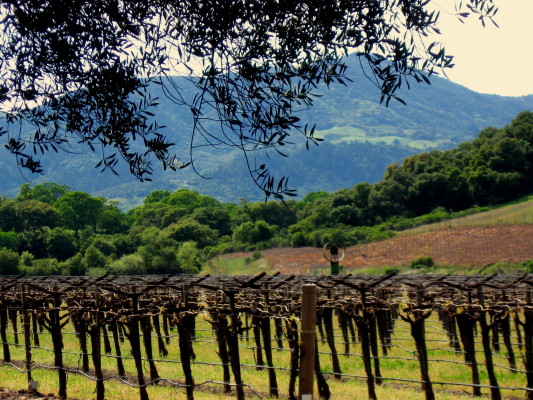
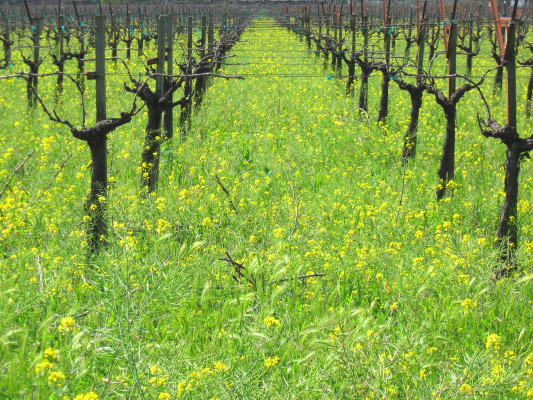
Pinot Noir, the finicky red wine grape which grows well in the Burgundy region of France struggles to find its home in Napa Valley.   Taking into account that Pinot Noir grapes need warmth and moisture, there has been some success in the Carneros American Viticultural Area of Napa Valley and the majority of aficionados gravitate accordingly.   What many do not realize, however, is that there is a small sleepy American Viticultural Area (“AVA”) which has had coveted success at growing flavorful and aromatic Pinot Noir grapes.   The Wild Horse Valley AVA is located in the hills on the southeast corner of Napa County and Solano County.   It is here that Napa wine country receives some of its coldest temperatures, yet is afforded with more sun exposure than many other areas of Napa Valley.   Combine rocky volcanic soil with the maritime breezes characteristic of the Carneros AVA, Pinot Noir produced from the Wild Horse Valley AVA packs a sensuous punch.  Pinot Noir enthusiasts, however, can put down their car keys and relax.   Rushing to this small little-discussed AVA will not afford wine tasting opportunities.   Despite covering 3,300 acres, only 100 acres are planted with grape vines and those acres are owned primarily by three separate growers.   Wait, growers?   There are no wineries in the Wild Horse Valley AVA.   Despite the lack of presence of wineries, the Pinot Noir grapes are coveted from this AVA as they are characteristically full of bright red fruit flavors and pleasantly aromatic.   To further make this a search worthy of avid wine connoisseurs, only a handful of wineries in Napa Valley source fruit from the Wild Horse Valley AVA to make Pinot Noir.

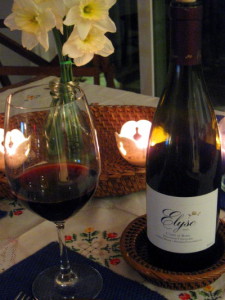
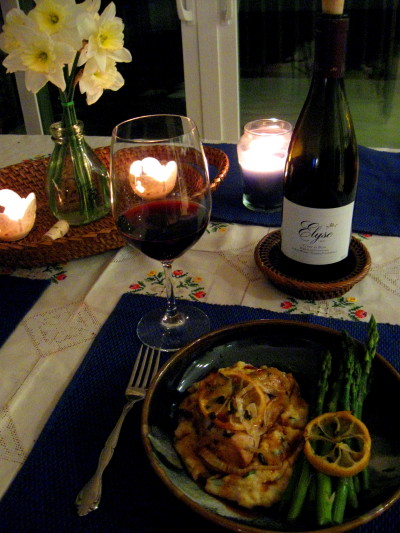
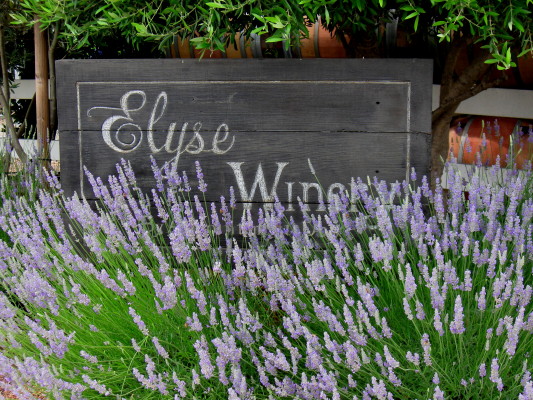
While California Pinot Noir is often regarded as bolder than that of its French counterparts, the perfect blend of the two worlds can be found at Elyse Winery (“Elyse”) in Yountville where Ray Coursen strives to produce California Pinot Noir in line with the style found in Burgundy.  This week, to introduce readers to this small AVA, I have selected to feature Elyse’s 2005 Wild Horse Valley Pinot Noir.   Opening a bottle of the 2005 Wild Horse Valley Pinot Noir is no sacrifice, except in the sense of that my wine collection is sacrificing for the benefit of my reading audience.   Nevertheless, opening the bottle, any remotely perceived sense of sacrifice is whisked into oblivion as the nose is immediately greeted by tantalizing aromas of red raspberry, cranberry and cherry.   As the wine opens a bit in the glass, the bouquet shifts to include sultry nuances of black raspberry, oak, bits of anise and a whisper of smoke.    Readily enchanted, the wine next meets the palate to introduce texturally a wine which is soft and silky with a velvet caress.   Dominated by flavors of red raspberry and spiced cranberry, the wine also delivers a truly polished finish.

Given the subtle sense of decadence of the wine coupled with the vintner’s intent to reflect the terroir, it is fitting to create a food pairing which will also reflect the land using seasonal items from my vegetable garden.   This week’s menu holds:

·         Grilled Stuffed Portobello Mushrooms on a bed of Garden Picked Lettuces

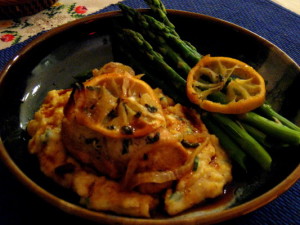
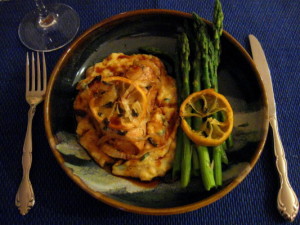
While Portobello mushrooms are not growing in my vegetable garden, the stuffing contents are and lettuce presently abounds for salad.    Portobello mushrooms have a rich earthy taste which is fitting for pairing with Pinot Noir wines.   To create a twist on the traditional stuffed mushroom recipe, I brushed the Portobello mushrooms with a roasted garlic olive oil before setting them atop a charcoal grill.   Next I harvested handfuls of fresh spinach, fresh thyme and some green onions from my garden.   Once chopped green onions are sautéed in some roasted garlic olive oil with a bit of the reserved chopped Portobello stems, the spinach is added with fresh thyme to sauté.   Adding plumped dried cranberries to the spinach mixture not only adds color but also mirrors the bright red fruit flavors experienced in the wine.   To help hold the spinach stuffing in the grilled mushrooms, I used a mild cheese such as Provolone to lay as a foundation in the mushroom prior to filling.  Once properly filled and brushed with a bit of balsamic vinegar, the mushrooms are placed back on the grill to finish cooking.  

img_0004 img_0003

To serve, simply place upon a bed of mixed lettuce leaves picked from the garden and toss in any remaining scallions and plumped dried cranberries.

img_0002

Garden-fresh flavors result which pop in the mouth but wash over the palate with a food finish of velvety comfort.  Couple the plate with the wine to experience soft velvet caresses which kiss the palate with seductive spice and rich bright red fruit.   Texturally, the dish matches the wine and the rich earthy flavors mirror the winery’s philosophy as well.   Choosing to use vegetables from the garden creates a flavorful fantasy so well-paired with the 2005 Wild Horse Valley Pinot Noir that for a brief moment one imagines that the wine’s grapes could have come from the same soil . . . uniting gourmet with the earth upon which we sit and rendering rich culinary feats within realistic grasp.

img_0001

Comments Off

May 26 2010

A Rosado’s Search for Summer

img_0001_9

Memorial Day weekend looms ahead and May for many areas of the country (including Napa Valley) has been fraught with cooler temperatures and lingering rain.   Yet this week most of the country has suddenly been gripped with steamy hot summerlike temperatures and even Napa is hurrying to join such weather festivities and anticipating quickly reaching into the upper 70’s this weekend.   This type of weather is fitting for Memorial Day weekend.  Summer does not officially arrive for another three weeks and yet for many folks, Memorial Day weekend represents the anticipation of longer days, warmer temperatures, backyard barbeques and overall relaxation.  In other words, this weekend symbolizes the concept of “almost summer”.

Nearly all of these above described images hang in the recesses of everyone’s mind and for some the imagery of glimmering sunlight on tree leaves or the memory of the gentle brush of a warm summer breeze seems almost real.   Nearly everyone will catch himself or herself following one of these summer memories momentarily searching for any sign of summer in his or her immediate surroundings.   And when one does find that breathless hint of all summer goodness ready to unfold, a summerlike wine should be within ready grasp to share. 

Casa Nuestra Winery (“Casa Nuestra”), located along the Silverado Trail in Napa Valley outside of St. Helena, is a small, historic family-owned winery that is a favorite among locals and known for small productions of diverse, quality, hand-crafted wines.   Wine at Casa Nuestra is crafted in a highly personalized way which is reminiscent of how wine historically was made in Napa Valley.  To visit is a treat and with luck you will encounter Gene Kirkham himself in the tasting room genuinely regaling guests with the history of his vines, grapes and wine.  

Among the bevy of wines to taste and explore this year is a beautiful dry Rosado made from organic estate-grown Cabernet Franc grapes, the “2009 Rosado”.    In years past, the Rosado has been released to wine club members only, but this year it has been available for purchase in the tasting room to visiting guests.   With one sip of the 2009 Rosado, one’s favorite summer images flood forward.   The nose is enchanting with aromas of fresh strawberries and melon.   Chilled, the 2009 Rosado reminds one of a strawberry ice in that it is delightfully sweet but due to its dry nature is refreshingly cool.  Allowing the wine to warm while sitting on a sunny back patio, it opens to reveal sweet strawberry but gives way to honeydew melon sprinkled with ginger spice.   With its light clean summer fruit and dash of spice, the wine has a simple depth with an appropriate dash of crispness to refresh the palate on an otherwise depleting hot summer day.   Even with summer yet to formally arrive, opening a bottle of Casa Nuestra’s 2009 Rosado now is an enthusiastic companion for “almost summer” celebrations.

img_0001_5

As discussed last summer, rosés in general are not created equal.   The grape used to make the rosé, the method of making rosé, and whether it is dry or semi-sweet will greatly influence the pairing suggestions for a rosé (please reference earlier posted article, “Time for Wine? Roll Out the Rosés!” for a more technical discussion).   Nevertheless, rosés should not be anticipated as intimidating.  Instead, rosés are frequently fun wines which give the palate great latitude to identify which fruit flavors it experiences.   Given the dry nature of Casa Nuestra’s 2009 Rosado and its penchant for strawberry and honeydew melon, these characteristics determined this week’s recommended pairing:

1)      Seafood Salad Mini Croissant Sandwiches;

2)     Pea Salad Mini Croissant Sandwiches; and

3)     Mini Phyllo-Cheesecakes.

Since this week includes a long holiday weekend which represents the start of “summer” for so many, I also found it fitting that this week’s menu should host food that can be served in a “small plates” fashion which can be used to entertain in an easy utensil-free picnic or backyard gathering.

Given that the garden has started to produce, it is also time to once again demonstrate sustainability by using home-grown seasonal produce whenever possible.  Collecting the first ripe pickling cucumber, fresh dill and chives from the garden, a refreshing seafood salad would complement the 2009 Rosado.   Adding some minced water chestnuts and creating a near guilt-free creamy dressing, all of the other ingredients along with some imitation crab were gently folded in.

img_0001_11

Collecting fresh spring peas and a garden-grown sweet onion, I decided to reproduce my mother’s Pea Salad which included chopped Virginia ham, cheddar cheese, hard-boiled egg and a homemade dressing.

img_0001_22

To serve, I decided to make these utensil-free by serving them in mini-croissants from a local bakery but only after picking a variety of sweet and semi-sweet lettuces from my garden.   Growing lettuce is easy to do and once you have, you cannot fathom returning to store-bought lettuce.  The flavors are so vibrant and clean that even the pickiest “non-lettuce” guest will convert.

img_0001_41 img_0001_32

Finally to put together a simple but decadently divine dessert, Mini Phyllo-Cheesecakes were created and topped with blueberries from the patio and slices of fresh strawberries from the garden.

img_00012

To serve for entertaining, platters can easily be prepared with sandwiches and dessert to serve guests and create a simple relaxed affair where summer daydreaming can effortlessly abound.

img_0001_6

The 2009 Rosado has not been forgotten as it pairs breathlessly with each menu item.   The Seafood Salad sandwiches are light and refreshing as the seafood is the perfect accompaniment to the chilled strawberry notes and the cucumber deliciously accentuates the wine’s notes of honeydew melon.    Taking the wine with the Pea Salad, the smokiness of the ham gives hints that this rosé will pair easily at barbeques also.   The sweetness of the peas is an ideal companion to the naturally sweet notes of the fruit in the wine, yet the sweet onion and cheddar cheese flirt with the wine’s hint of ginger spice.   The Pea Salad actually flushes out the extravert in the 2009 Rosado and accentuates its depth. 

The wine, decidedly light and crisp, also presents well with dessert.  When one pops a Mini Phyllo-Cheesecake into the mouth, fresh fruit bursts forward as it mingles with sweet cheesecake filling.  Followed by a sip of the 2009 Rosado, strawberry notes dance and the wine sets forth a crisp, clean lingering finish which refreshes.   My guests unanimously agreed that the only problem with these is that they beg for one more.   However, for those who are looking for the quintessential one-bite guiltless dessert, barring erosion of self-discipline, this is the dessert for you.

img_0001_71

Light, fanciful and carefree is Casa Nuestra’s 2009 Rosado.   Sipping in the sun with guests on a late May afternoon, smiles broaden, shoulders relax, and flip-flop attired feet raise onto tables and cross; all in symbolism of summer yet to come.

img_0001_8

Comments Off

Next »